
The Challenge
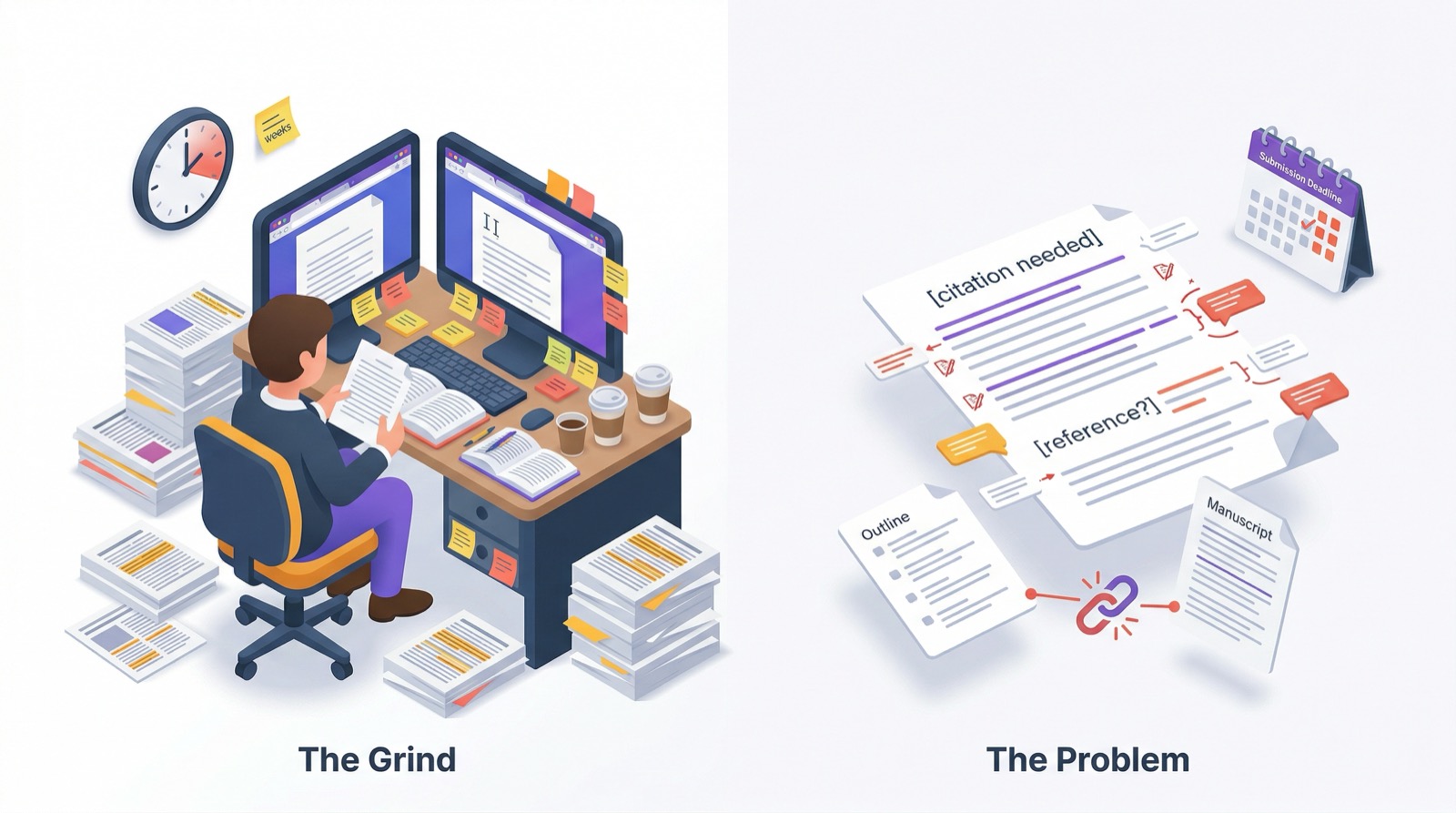
Writing a scientific manuscript from completed research is, paradoxically, one of the least supported steps in the research lifecycle. The analysis is done. The results are in hand. The technical report exists. Yet the work of transforming that material into a structured, well-cited manuscript suitable for journal submission remains almost entirely manual, and it is where projects stall.
The difficulty is not a lack of content, it is the translation work. A technical report is organized around what was done and what was found. A manuscript must be organized around what the reader needs to understand: why this work matters, how it connects to prior research, and what it means for the field.
The result is predictable. Manuscripts take weeks or months longer than they should. First drafts arrive with incomplete citations, inconsistent structure, and gaps where the literature review should be.
How It's Done Today
In most research teams, manuscript writing begins with someone opening a blank document and a copy of the technical report side by side. The introduction requires a literature review that the technical report may not contain, so the writer pauses to search for relevant publications, reads them, and weaves them into the narrative. This cycle of writing, searching, reading, and citing repeats throughout the process.
Citation management is particularly fragile. Writers maintain mental maps of which claims need references, which references they have already cited, and where in the document each citation belongs. When writing spans multiple sessions or multiple authors, these mental maps diverge.
The AI-Enabled Approach
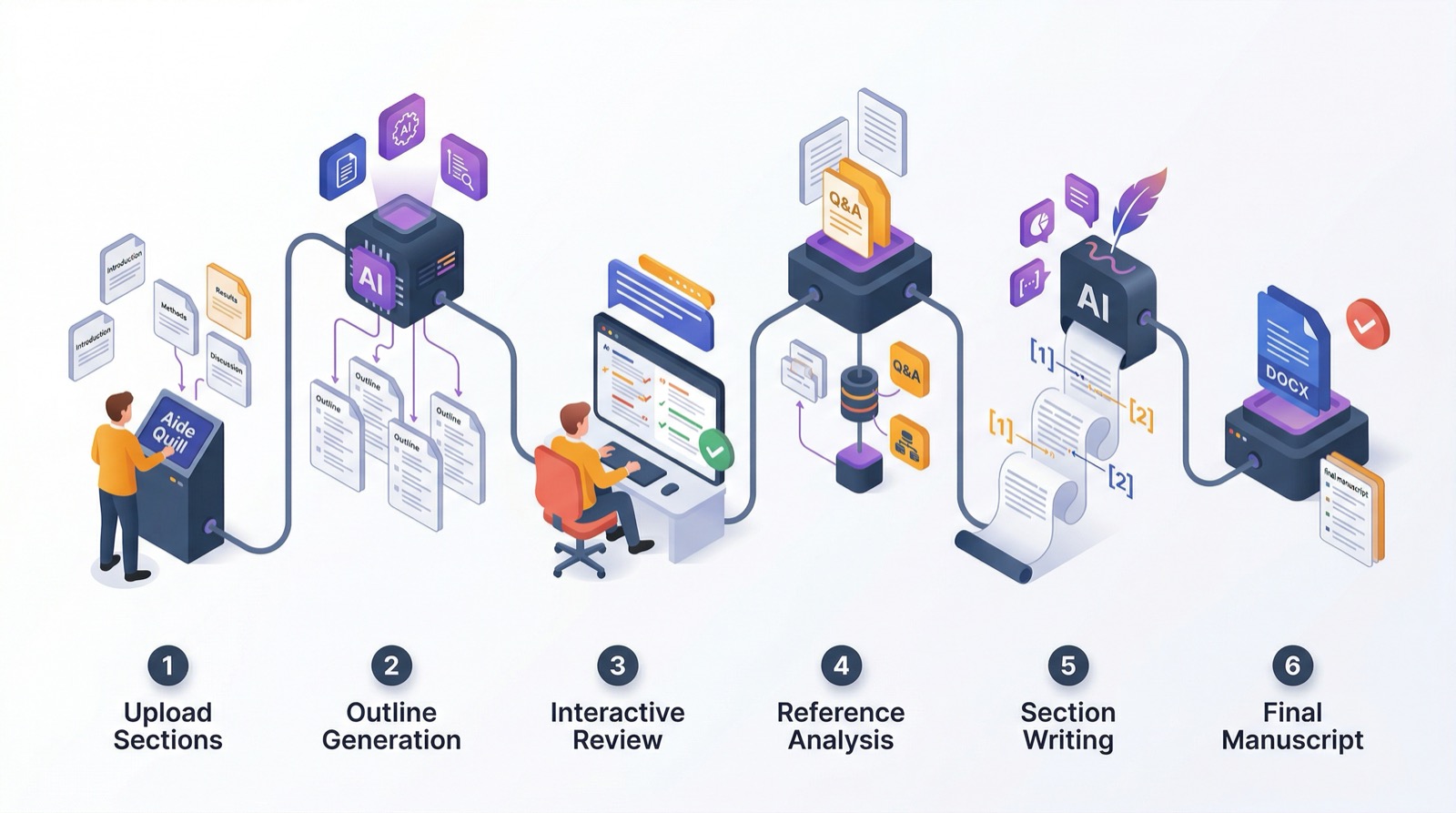
You start by uploading your technical report sections: the introduction, methods, results, and discussion materials you already have, as PDFs, Word documents, or plain text. From there, AideQuill reads and analyzes each section and generates a detailed, hierarchical outline for your manuscript.
The outline is a structured document with three levels of detail: sections, subsections, and specific points to cover, each grounded in the content you provided, following established conventions for scientific writing in your field.
Interactive outline review
Before any writing begins, you review the outlines through a conversational interface. You can ask questions about the proposed structure, request revisions to specific sections, or add new sections the system may have missed. You approve the outline when you are satisfied that the structure is right.
Introduction research
Once the outline is approved, the system develops the introduction by generating targeted research questions based on the outline structure, then analyzes each uploaded reference document against those questions in parallel. The introduction is then written with inline citations traced to their sources.
Section writing with citation tracking
The methods, results, and discussion sections are written sequentially, each following its approved outline. For each section, the system identifies where citations are needed and builds a suggested reference list with rationale for each recommendation. The final output is a complete manuscript, delivered as both Markdown and a formatted Word document, ready for your review and refinement.
See It Work
A recorded working session: a technical report goes in, and a structured, cited manuscript comes out, with the outline review and citation tracking shown as they happen.
What Makes It Different
The citations exist before the sentence does. AideQuill renders documents from a structured evidence base with provenance carried through, so every claim arrives already connected to its source. A general writing assistant works in the opposite direction: it generates prose first and leaves you to source it backwards.
It fails honestly. In live validation against an empty reference library, AideQuill produced zero fabricated citations. Where evidence was missing, it emitted explicit CITATION_NEEDED and UNRESOLVED markers instead of inventing a reference. When it lacks a source, it tells you.
What It Means for You
- The structural work of organizing a manuscript is handled before a single sentence is written, and you approve it before writing begins.
- The introduction is grounded in your actual reference materials, with research questions derived from the outline and evidence extracted systematically from each source.
- Citation tracking is automated across the entire manuscript: the system identifies where references are needed, assigns sequential numbers, and provides a rationale for each suggested citation.
- Each section is written following its approved outline and the corresponding technical report content, maintaining consistency between what was planned and what was written.
- The conversational outline review means structural problems are caught early, before they become expensive to fix in a half-written draft.
- You receive a formatted Word document with all sections assembled, references consolidated, and suggested citations clearly marked for your verification.
AideQuill gives research teams a structured path from completed technical work to a citation-ready manuscript draft, replacing the blank-page problem with a guided, evidence-grounded writing process.