
The Challenge
A Health Technology Appraisal submission is one of the highest-stakes documents your organization will produce. External review, arriving early enough to act on, separates a submission that has been stress-tested against the agency's lens from one built entirely on internal assumptions.
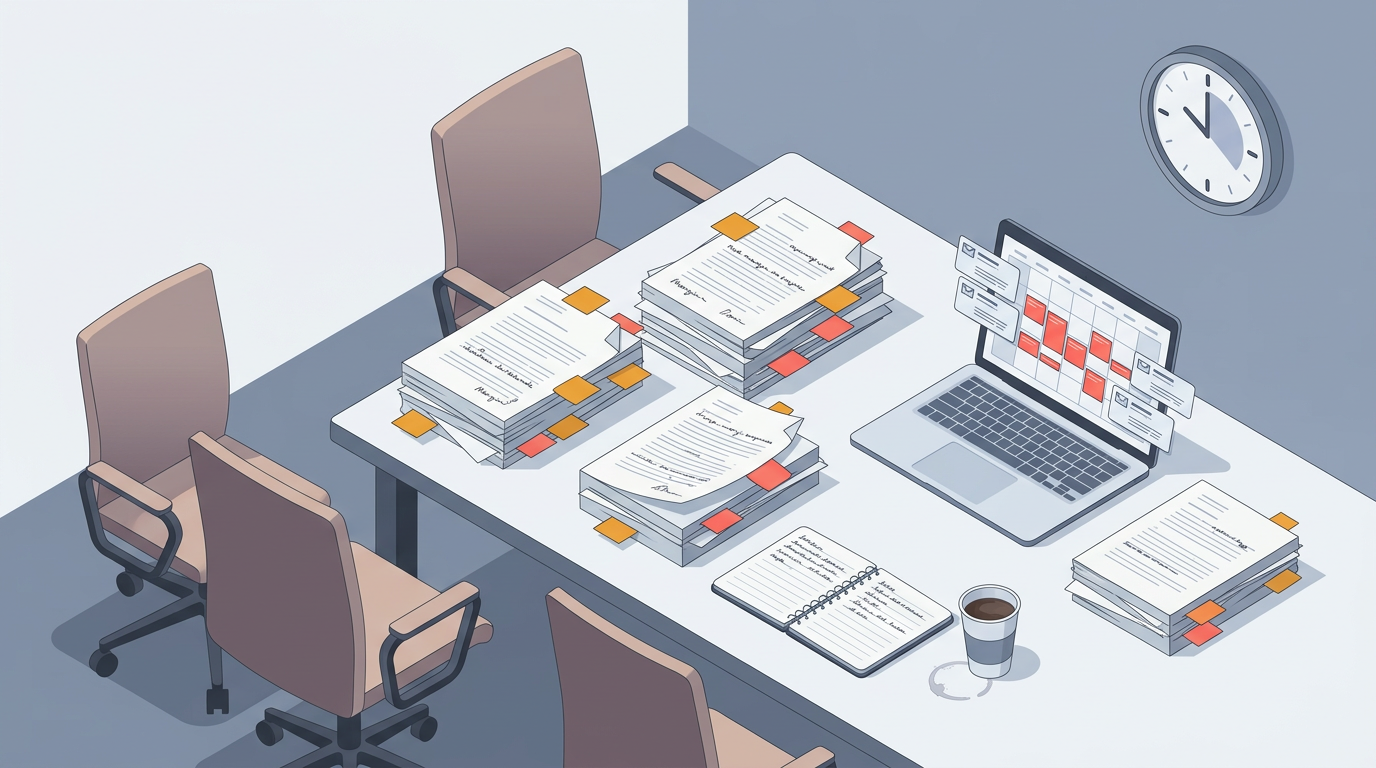
The real problem is timing and opportunity. Pre-submission meetings with HTA agencies typically happen late in the development cycle, when critical evidence generation activities are already complete or nearly so. These meetings are also one-shot opportunities: there is no second meeting before your official submission.
Most evidence packages reach regulators having received either no external agency input at all, or feedback that arrived too late to make a meaningful difference.
How It's Done Today
Securing a pre-submission meeting with an HTA agency requires months of preparation before a single document lands on a reviewer's desk. Teams must define the scope of the scientific advice request, prepare a detailed briefing document, align internally across medical, HEOR, market access, and regulatory functions, and submit a formal meeting request, often six to twelve months before the meeting itself.
The meeting itself typically runs a few hours. Your team leaves with notes and decides internally what to take forward, constrained by where you are in the development timeline. The next opportunity to receive external agency scrutiny of your evidence is your official submission.
The AI-Enabled Approach
With this application, you can run as many evidence review sessions as your team needs, at any stage of development, without scheduling a single meeting or waiting months for a slot.
The expert panel is configurable. You define the skills, perspectives, and experience profile of the reviewers that matter most for your asset and submission context, and can incorporate contextual nuances specific to your situation, such as unmet need, whether your technology is first-in-class, or payer precedent.
The committee is useful long before a submission is final. You can engage it early in your evidence planning, before pivotal data are available, to pressure-test your intended value propositions and identify where the likely lines of challenge will come from.
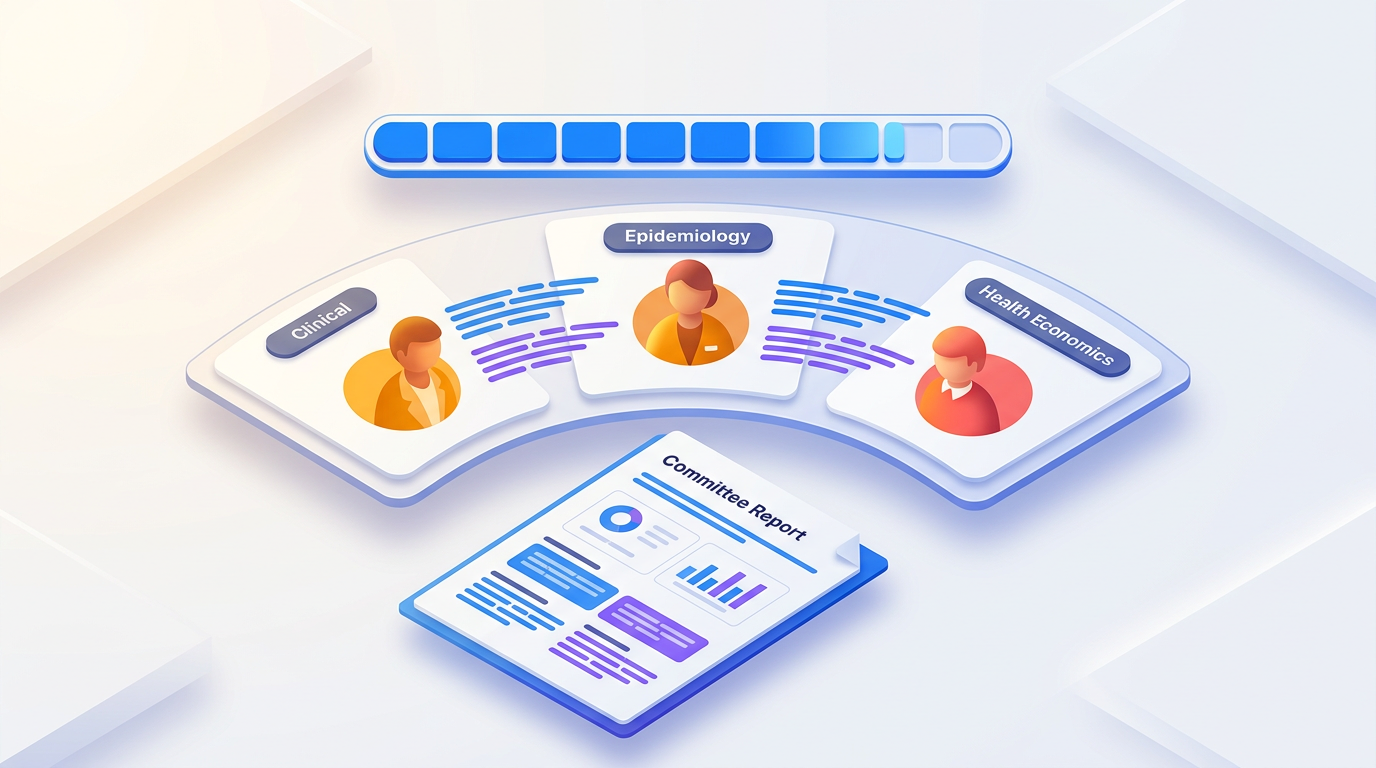
Before each session, the system independently conducts background research across ten critical domains, drawing on real literature databases and credible online sources. A panel of specialized AI experts then convenes: a clinical reviewer, an epidemiologist, and a health economist, each independently reviewing the submission and actively challenging the other experts' assessments, with a dedicated moderator managing the discussion.
What you receive is a complete, professional committee report: an executive summary, section-by-section analysis, a structured set of questions for the manufacturer, and a full discussion transcript. The entire process, from document upload to final report, takes 10 to 15 minutes.
What It Means for You
- What once required 6 to 9 months of preparation, coordination, and follow-up now completes in 10 to 15 minutes.
- Automated background research across 10 domains eliminates the duplicated literature synthesis burden that falls on every expert reviewer before each submission cycle.
- Structured peer challenge between a clinical reviewer, epidemiologist, and health economist surfaces methodological flaws and evidence gaps that single-pass or siloed reviews routinely miss.
- Every expert contribution, moderator decision, and committee conclusion is captured in a full discussion transcript, giving you an auditable reasoning trail.
- Consistent coverage of all critical review dimensions is guaranteed across every submission, regardless of who is available.
- Smaller biotech and medtech teams can conduct pre-submission reviews with the same rigor and depth as large pharma organizations, without the headcount or coordination overhead.
The Simulated Evidence Review Committee gives your team the expert scrutiny your submission deserves, at the speed your submission timeline demands.